Felix Richter was born to Janos and Ursula Richter in Coburg, Germany, where the Richter family had deep connections and were among the most respected of its physicians. His parents, both members of an ancient society, were always out of the Richter manor at medical conferences or providing humanitarian aid around the world. Travelling exposed young Felix to new cultures, languages, and architecture unlike anything he had ever seen before. He wasn’t sure when the architectural bug bit, but when it did, it bit hard, and he knew that despite his family’s legacy, he would one day design buildings that would inspire the world. By 23, he was considered an architectural prodigy having won the Swiss Architect Medal and the German National Design Award. Yet despite his success, Felix couldn’t shake the gnawing feeling that his success had more to do with luck and connections than talent and hard work.
Growing up, Felix was socially awkward and introverted, preferring his imagination to the company of others. He had few friends so when he wasn't traveling with his parents, Felix was in his father’s library devouring rare books, studying history and architecture, soaking up anything and everything he could on architectural movements throughout the centuries. His father hoped young Felix would learn to be more outgoing and hired every possible specialist to help improve his social skills. When these efforts failed, he threw in the proverbial towel and figured his son would learn when he was ready. He then joined young Felix in the library, where he helped him build elaborate wooden models of buildings while telling him wild stories about his secret club and their ancient battle against a dark and ominous force. Stories, Felix was sure, his father had made up to make his ‘Imperiatti’ group sound cooler than it actually was.
Felix sometimes wondered if his design sensibilities came from his summer trips to Dyer Island, a private island that boasted some of the world's finest homes and designs. Every summer, Felix would accompany his parents to the island, where members of The Imperiatti would encourage their children to network and forge lifelong connections. Felix didn’t mingle well with the other teenagers, but he did make four friends who like himself didn’t quite fit the ‘high-society’ mold. They were often ridiculed by other teens and disparagingly called ‘The Pariahs,' a name they liked and gladly adopted. Instead of practicing public speaking and engaging in endless debates, The Pariahs spent most of their time exploring the ruins and mysteries of the island until one of their adventures took a turn for the worse.
Exploring an abandoned internment camp, they descended into what seemed to be an underground laboratory where they uncovered old, leather journals with illustrations and notes of inhumane experiments conducted on prisoners of the First Opium War held by the British East India Company. As they pushed through a locked door, they found a chamber scattered with human skeletons and dusty vials filled with an unknown serum. Before they could examine the contents, the ground seemed to shake beneath their feet and a hissing sound filled their ears. A strange fog suddenly appeared and giant claws seemed to burst from the ground as dark imagination mingled with reality to terrorize them. Before they understood what was happening, Felix’s father and several other parents came to their rescue, using strange tools and objects to protect them. Felix stared at the scene in shock and disbelief. He wasn’t sure if he was dreaming or living one of his father’s ridiculous, supernatural stories. By the time he realized it wasn’t a dream, it was all over. The Pariahs were safe, but their parents had mysteriously disappeared without a trace.
After the shock of his father’s disappearance, Felix searched for any theory that could help him understand the phenomena he had encountered on the island. He exchanged notes with The Pariahs and other people he had met online who had also lost loved ones in a similar way. The tragedy had fostered a strong relationship between The Pariahs and for years they worked together to unravel the mystery of what had happened to their parents. But nothing made sense, and every lead they pursued hit a dead end. With time their efforts dwindled, and the five friends slowly grew apart, each going their separate ways, hoping to forget the nameless darkness that had robbed them of their parents.
Over the years, Felix proved to be an exceptional architect, though he found little inspiration working for others. He realized his father was right. His lack of social skills was holding him back. With dedication and purpose, he improved his diction and decorum and learned how to network or ‘play-act’ as he liked to call it. He created the perfect façade to make himself more likable and popular with potential clients. After working for several architectural firms, he established his firm with his colleague Lauren Golder. Both shared a similar vision and were philosophically opposed to formulaic modernist buildings, often experimenting with unusual materials, shapes and structures.
Felix continued to undermine traditional expectations in favor of the edgy and unconventional devices that set the architectural world abuzz. But even with all the accolades, he couldn’t shake the feeling that he was a phony, like an actor who had learned a part instead of a true architect who had inspired the world with an impeccable design. During these moments of insecurity and self-doubt, he would distract himself with endless parties and drown his anxieties in alcohol, wishing his father was still around for some harsh advice and tempered wisdom.
Eventually, Felix’s girlfriend announced that he was going to be a father. The news shook him to the core and, wanting to inspire his unborn child as much as his father inspired him, he quickly pulled his life together. What he needed was a project that would challenge him and cement his worth as an architect. As fate would have it, the perfect opportunity presented itself when old friends of his father commissioned his firm ‘Richter and Golder’ to build something new and unconventional on Dyer Island. The challenge excited and terrified Felix, who now drowned his anxieties with articles and books on parenting.
Within six months, the Dyer Restoration Project was underway, and as Felix surveyed the island, he suddenly heard a familiar voice calling out to him from beyond the shattered Victorian buildings and the crumbling ruins hiding dark stories long hidden and forgotten. Through a strange, gathering fog, he saw a form slowly take shape. His eyes widened, and his lips parted, but no words issued forth. Could it be? Was it possible? No... it couldn’t be... it was... impossible... and yet...
With dawning realization, Felix staggered back as he watched his father emerge from the fog. His legs felt weak, and his rising heartbeat thrashed in his ears. It was him. It was really him. His unborn child would know his grandfather, and he could finally show him how much he had accomplished since he disappeared. They stared at one another for a long moment. Then his father gave him a look of disappointment, turned his back on him, and proceeded to walk away. Over his pounding heart, Felix chased after him and was never seen again.
To understand the human condition, one must rise above it. This was the credo of Talbot Grimes, a Scottish chemist whose unrestrained ambition took him to towering heights. As a boy, he was a popular child—bright, charismatic, and unafraid to challenge authority—yet despite his social graces he was fiercely independent, spending much of his time exploring the sprawling fields near his town alone. What began as a child's curiosity nearly turned deadly after experimenting with a patch of poisonous foxglove. For days, he laid in bed dripping with sweat, purging any food that touched his stomach. When he recovered, it wasn't fear that gripped him, but fascination. There was something magical in how a single flower could so drastically affect him.
Into his adult years, his ambition developed as quickly as his questionable methods. He attended the London School of Medicine and excelled despite several reprimands. His willingness to push the limits secured him a position with the British East India Company, and within seven years he was made head chemist. In time, he completed one of his greatest achievements: a chemical that could increase a worker's productivity while reducing their need for rest. He was rewarded with a secret laboratory beneath a prison camp on Dyer Island.
There, off the coast of India, prisoners from the Opium War became his unwilling subjects, leading to a drug that allowed soldiers to withstand incredible amounts of pain. Though most side effects were minor, there were rumors that a small number of soldiers went mad. In feral states, they massacred villages, impaling the populace on bayonets, leaving them hanging from trees. There were no official reports on the subject, and Talbot refused to blame himself for what could only be exaggerated war stories.
Though his callous brilliance seemed unflappable, he was ignorant to the enemies his questionable work had amassed. The realization struck him quite literally—with a steel pipe to the back of his head during a trip to Mangalore. He was bound and loaded into a wagon. When his blindfold was removed, a sickly man showed him a mass grave filled with hundreds of bodies. Unbeknownst to Talbot, his productivity-increasing drug had killed nearly an entire factory's worth of workers. He knew he couldn't defend himself against the anger and accusations of his abductor—all he could do was curl up as the blows from the steel pipe rained down. His body was thrown into the grave and left for dead. Shifting between consciousness and the darkest black, he crawled for an escape, fingers sinking into rotting flesh. Black flies feasted on his uncovered skin, the sensation of a hundred pin pricks stabbing into him. As he collapsed, he came face to face with a dead woman’s dazzling hazel eyes. Too weak to pull away, he could do nothing but witness his life’s work.
Then, from the edge of death, he was brought back. He found himself on a small bed as a kindly, wrinkled face looked over him. With each pained breath, he was nursed back to health in an ancient mystery school posing as a monastery. In verdant gardens behind tall, unassuming walls, monks studied forbidden texts, striving to expand the human mind in the search for other dimensions—believing one to be connected to the other.
Talbot’s knowledge proved indispensable, his mind-altering chemicals integrating seamlessly with theories of neural expansion. He realized then that his salvation was no coincidence—he was plucked from the pit specifically to advance the school’s knowledge. He agreed to help until his recovery was complete, being tasked with researching what the monk’s called the soul chemical, a compound derived from the pineal gland that could open the mind’s eye. What began as a favor to his saviors, soon became an obsession. Poring over the school’s archives of lost texts, he uncovered scientific formulas that confirmed previously unthinkable ideas. He dreamt of ushering humankind into a new period of enlightenment. Perhaps then, the nightmares of hundreds of dead factory workers—and of those two hazel eyes—would fade from his mind.
As he came closer to a breakthrough, the demeanor of the monks shifted. The gentle smiles they offered were paired with uneasy eyes that quickly darted away when spotted. The polite conversations he was once privy to turned to hushed murmurs. The last thing he would see of the school was the cracked ceiling above his bed, branching like a dendrite through plaster.
His next memories were a shattered mosaic of images and sensations. Smearing lights, horse hoofs on cobblestone, coarse burlap scratching at his cheeks, and sharp bites into his arm. He awoke ragged and unwashed, splayed on the straw mattress of an opium den. Mind in a dense fog, his first thought was of his notes, the only record of his groundbreaking revelations. He searched frantically, scrambling through the dingy basement, pleading aloud for help. The few other denizens looked up from their hammocks, offering nothing but drug-soaked eyes and apathetic gazes that soon fell into half-slumber. Before he noticed the robed figure appear behind him, a needle plunged into his arm and the world disappeared once more.
Awoken. Again. Each time, hazier than the last. He tongued at hollow gaps between his teeth. How long, he wondered. A faint memory returned. The soul chemical. His notes. The verge of a breakthrough. A faraway whisper entered his mind.
He fumbled with a stone, sharpening it with shaking hands. In the dim light of the den, amongst the catatonic occupants, he carved his research from memory into the walls. He wrote for hours until his fingers bled, moving to the floor, taking in everything the voice whispered despite his inability to comprehend it. When there was nowhere left to write, he gripped the stone and carved the message into his chest. Stained with blood, he witnessed a miracle appear before him—a magnificent field of lush, orange flowers. The whispered voice beckoned to him, urging him to enter the field and discover worlds and dimensions beyond human comprehension. For a moment, Talbot felt the sense of wonder he possessed as a child.
The denizens of the opium den awoke to silence, the dry scent of smoke still lingering in the air. Shambling out of their drug-hazed fog, they found the stone floor wet with blood, tiny rivulets coursing through the cracks. As eyes adjusted to the darkened room, the jagged lettering scrawled along its length began to appear. Written over and over without end, there was but one single line: Death Is Only the Beginning.
Chapter maps enter the shared matchmaking pool; buying a pack is not required to play on them.
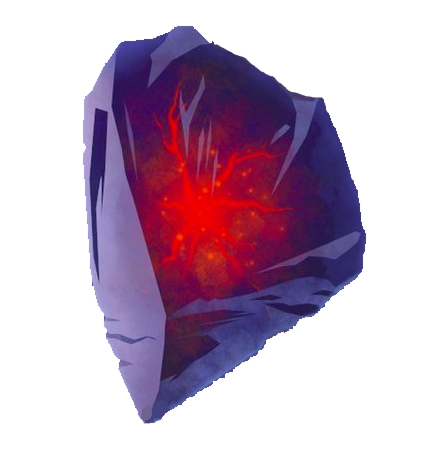 Shard Unlockable